
The Litany of the Saints PDF offers a concise digital version of the traditional prayer, enabling faithful to recite the Kyrie, Mother, Angels, and Saints sections with ease. Its format preserves the original structure while enhancing accessibility for modern devotion.
Purpose of the Litany
The PDF version allows for easy integration into digital prayer apps, enabling users to set reminders, share verses, and track their devotion over time. Its searchable text feature helps the faithful locate specific saints or phrases quickly, fostering a deeper personal connection with the saints’ intercessory power. Moreover the format supports multilingual editions ensuring that the litany remains accessible to community regardless language barriers! Its digital form also allows features like audio recitations and prayer lists, for the faithful !

Historical Background
Originating in the medieval Church, the Litany of the Saints evolved from the Roman Canon, reflecting a growing devotion to intercession. Its formalized structure—Kyrie, Mother, Angels, Saints—was codified by the 12th‑century councils, ensuring uniformity across Christendom.
Development Through Ages
From the early Middle Ages, the Litany of the Saints was a spontaneous prayer of the faithful, invoking the intercession of the holy figures listed in the Roman Canon. By the 12th century, the litany was formalized, with a fixed sequence: Kyrie, the Blessed Mother, Angels, and a comprehensive list of Saints—Patriarchs, Prophets, Apostles, Martyrs, Bishops, and Doctors of the Church. During the Renaissance, the litany spread beyond Rome, adapted to local languages and customs, while still maintaining its core structure. The Counter‑Reformation reaffirmed its use in Catholic worship, emphasizing the communal aspect of intercession. In the 19th and 20th centuries, the litany was incorporated into the Roman Missal and the General Roman Calendar, ensuring its presence in Mass and private devotions. Today, the digital PDF format preserves this centuries‑old prayer, allowing easy distribution and accessibility for contemporary believers worldwide. The PDF format also allows for annotations, bookmarks, and hyperlinks, making it easier for users to navigate between saints and related prayers. Thus, the Litany of the Saints PDF bridges tradition and modern tech, inviting believers worldwide to join a universal prayer.

Structural Overview
The PDF presents the Litany in four ordered sections: I. Kyrie Eleison, II. The Blessed Mother, III. Angels, and IV. Saints. The Saints list is subdivided into Patriarchs and Prophets (with Saint Joseph last), Apostles and Disciples, Martyrs, Bishops, and Doctors of the Church, mirroring the traditional Roman Canon structure.
Main Components (Kyrie, Mother, Angels, Saints)
Each component serves a distinct purpose: the Kyrie Eleison calls for mercy, the invocation of the Mother emphasizes intercession, the Angels remind us of heavenly guardianship, and the Saints’ names invoke a universal communion of believers across time. The PDF format preserves the traditional Latin wording. Users can highlight, annotate, or print the document, making it a versatile tool for personal daily devotion, prayerful liturgical preparation, or academic study. The structured layout ensures that even those unfamiliar with the full litany can follow the progression smoothly, reinforcing the rhythm of prayer and the sense of unity within the Church community.

The Saints Enumerated

The PDF lists saints in four groups: Patriarchs and Prophets, Apostles and Disciples, Martyrs, and Bishops and Doctors. Saint Joseph appears last. Names span biblical, early church, and universal figures, reflecting Catholic heritage. The list honors all call to holiness
Patriarchs, Prophets, Apostles, Martyrs, Bishops, Doctors
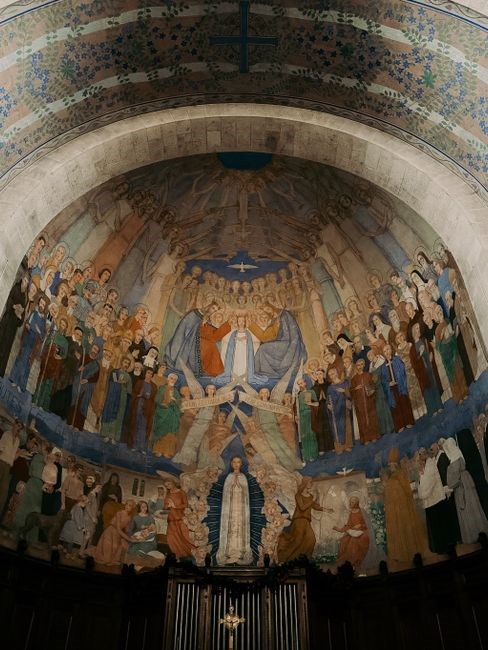
In the PDF version of the Litany of the Saints, the enumeration of holy figures follows a structured hierarchy that reflects the Church’s historical and theological development. The first section lists Patriarchs and Prophets, beginning with Abraham, Isaac, Jacob, Moses, and David, and concluding with Saint Joseph, who is always placed last in the sequence. The second section names the Apostles and the Disciples of the Lord, including Peter, Paul, James, John, and the twelve original disciples, emphasizing their foundational role in spreading the Gospel. The third section honors Martyrs, whose steadfast faith in the face of persecution is commemorated through names such as Saint Stephen, Saint Perpetua, and Saint Polycarp, illustrating the Church’s tradition of witness. The final section contains Bishops and Doctors of the Church, featuring figures like Saint Augustine, Saint Thomas Aquinas, and Saint Jerome, whose theological contributions have shaped Catholic doctrine. This arrangement not only preserves the liturgical rhythm but also provides the faithful with a comprehensive list of exemplars to invoke during prayer. The litany invites the faithful to contemplate the communion of saints, encouraging prayerful reflection and devotion throughout the day. By sharing this PDF, groups global unite in prayer, drawing strength from the saints’ intercession!!
Liturgical Significance
The Litany of the Saints PDF is a tool, inviting believers to invoke the intercession of the faithful departed. It strengthens prayer, parishioners, deepens devotion, echoing the Church’s call to seek saints’ aid in spiritual growth!
Role in Catholic Devotion
The Litany of the Saints PDF serves as a digital conduit for the faithful, allowing them to invoke the intercession of the entire communion of saints in a format that is both portable and readily accessible. By presenting the traditional Kyrie, the Mother, the Angels, and the Saints in a single, easy‑to‑navigate document, the PDF reinforces the communal nature of Catholic prayer and the belief that the Church’s spiritual heritage transcends time and geography. In liturgical practice, the litany is often recited during Mass, adoration, and various devotions, and the PDF format ensures that parishioners can keep a copy on their mobile devices or computers, thereby fostering continuous engagement. Moreover, the digital version preserves the original structure and wording, allowing the faithful to maintain reverence while benefiting from modern technology’s convenience. The PDF also facilitates the sharing of the litany across dioceses and online platforms, supporting the Church’s mission of universal accessibility and encouraging a deeper sense of unity among believers worldwide. Its digital presence also allows for quick updates, ensuring that any corrections or additions are reflected promptly, thereby maintaining the integrity of the prayer across all contexts. Thus, the PDF stands as a living testament to faith.

PDF Format Advantages
The PDF format ensures the Litany of the Saints remains faithful to its original layout, is universally readable, and can be easily shared across devices. It protects formatting, allows quick access, and supports offline use, enhancing devotion worldwide dailyfor all

Accessibility and Distribution
The PDF version of the Litany of the Saints is lightweight and universally compatible, enabling instant download and offline reading on any device. Its fixed layout preserves the original headings—Kyrie, Mother, Angels, and Saints—while the full list of patriarchs, prophets, apostles, martyrs, bishops, and doctors remains clear. Because PDFs open on Windows, macOS, Linux, Android, and iOS, the prayer can be accessed worldwide without special software. Distribution is streamlined through official church sites, diocesan portals, and digital libraries, where the file can be shared via email or social media. The format also supports bookmarking, search, and printing in high‑resolution, making it suitable for both digital devotion and tactile use. Additionally, the PDF can be embedded in online devotionals or prayer apps, expanding its reach to younger audiences. Its non‑editable nature preserves textual integrity, while cloud storage options allow synchronized access for parish groups and retreat centers. Overall, the PDF format bridges generational gaps, promotes continuous prayer practice, and embraces modern technology for global devotion. Its design also supports accessibility features such as zoom and screen‑reader compatibility, ensuring inclusivity for users with visual impairments! This enhances devotion.

Sources for PDF Download
Church sites, diocesan portals, and Vatican libraries host the Litany of the Saints PDF. Repositories like the Catholic Library, Vatican’s archive, and parish sites provide authentic, free downloads worldwidefor all ages inall ways.
Official Church Resources and Libraries
The Vatican Apostolic Library in Rome holds Latin manuscripts Litany of Saints, offering facsimiles for scholars faithful all alike.
Digital facsimiles are updated on the Vatican’s website, allowing user to download authentic PDF of the Litany of the Saints!!
The Catholic Encyclopedia online offers contextual commentary and links to authorized PDF versions of Litany of the Saints!!
Archives, like those in New York and São Paulo, keep regional editions that reflect veneration while preserving the core structure of the Litany, ensuring local devotion remains intact.
The National Catholic Library in Washington, D.C., offers a searchable database of documents, including the Litany of the Saints for all.
The Catholic Digital Library, a joint project between the Vatican and major universities, curates scans and offers metadata. online!
The Holy See’s Digital Library (HSL) offers PDFs verified against the Roman Missal and official guidelines for faithful for all.
Users can consult the “Liturgical Resources” section on Catholic Church website, which lists approved PDFs and guidelines for all.!

Common Variations and Adaptations
Regional versions of the Litany of the Saints PDF add local saints, adjust angel order, and replace the invocation with a regional prayer. These adaptations keep the core structure while honoring local devotion for all faithful
Regional Litany Differences
Regional litany PDFs often incorporate local saints, reflecting the cultural and historical context of the community. In Latin America, for example, the list may include figures such as St. Juan Diego or St. Pedro de Valdivia, while in the Philippines, St. Lorenzo Ruiz and St. Pedro Calungsod appear prominently. European versions might feature St. Catherine of Siena or St. Bernard of Clairvaux. These additions are not arbitrary; they are carefully selected to honor the spiritual heritage of the region and to provide a more personal connection for the faithful. The order of the saints may also shift, with local patrons placed closer to the end of the list to emphasize their protective role. In some adaptations, the invocation of the Holy Trinity is modified to include a regional liturgical phrase, and the closing prayer may reference a local feast day. Despite these variations, the core structure—Kyrie, Mother, Angels, and the four main categories of saints—remains intact, ensuring the litany’s theological integrity while allowing for cultural expression. When shared as a PDF, the litany can be printed, annotated, or embedded in digital prayer apps, making it accessible to pilgrims worldwide and ensuring that the tradition remains vibrant across languages and cultures and can be shared via email or social media.!!